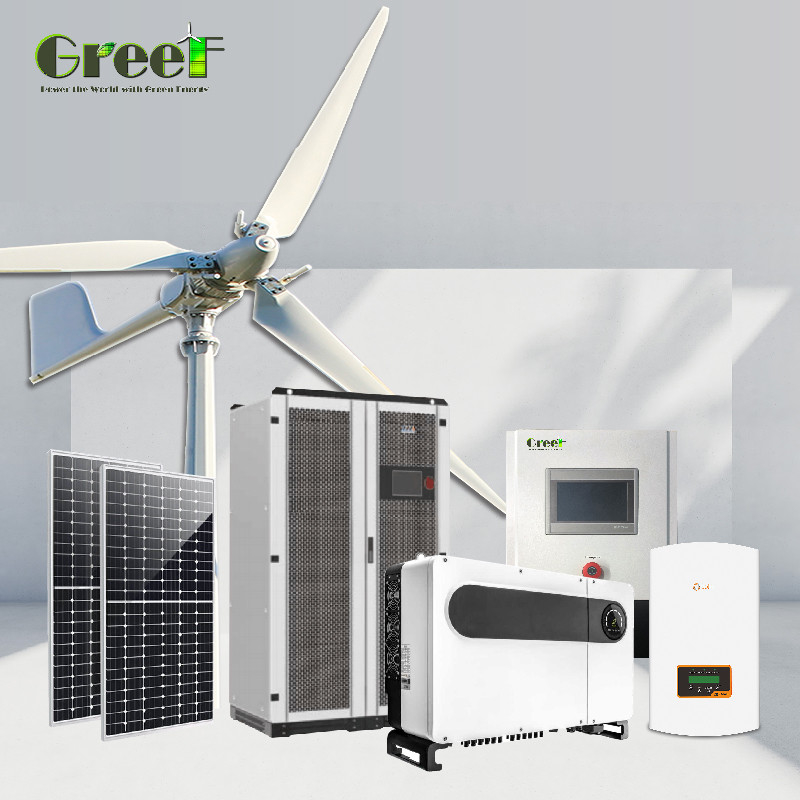
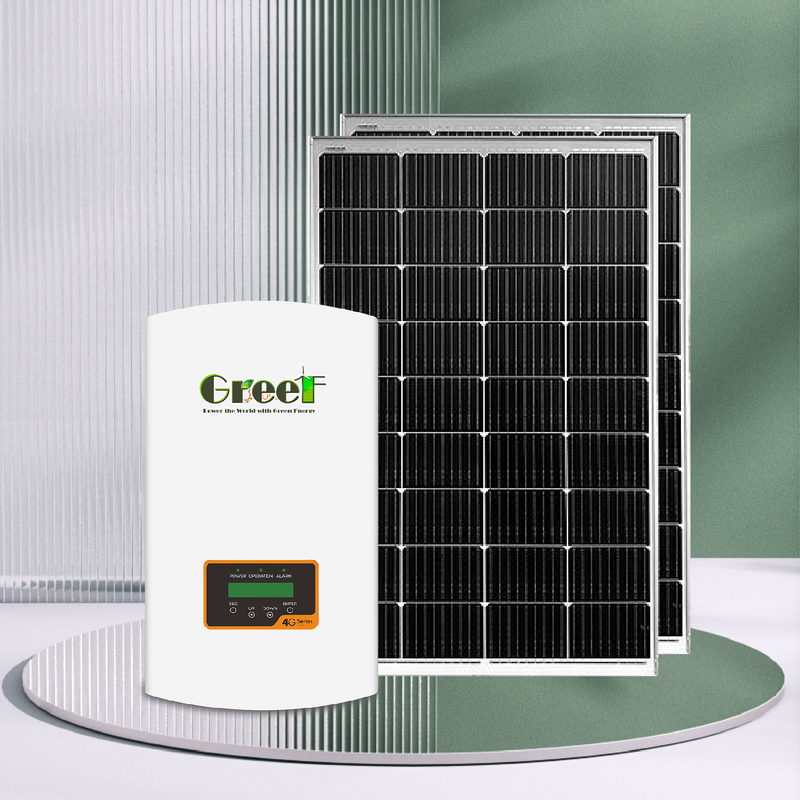
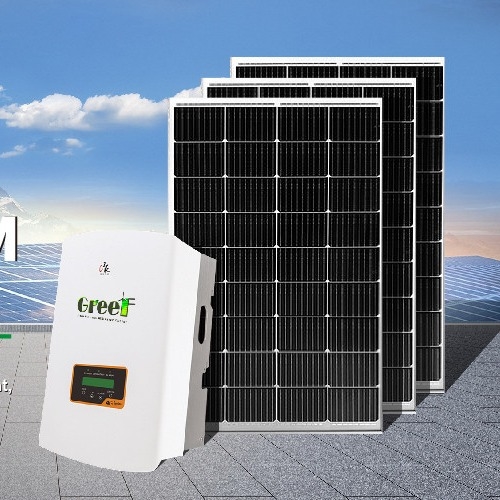
Systèmes complémentaires éoliens et solaires connectés au réseau.
Un système connecté au réseau est un système intégré de conversion et de stockage d'énergie.L'onduleur convertit la puissance CC en puissance CA pour répondre aux exigences du réseauLe contrôleur agit comme le cerveau du système, régulant avec précision le fonctionnement de chaque composant pour assurer une conversion d'énergie efficace et stable.le stockage de l'énergie lorsqu'il y a un excédent d'énergie et sa libération lorsqu'il y a un pic de demande ou une pénurie d'énergie pour équilibrer la charge sur le réseau;L'ensemble du système travaille ensemble pour réaliser une production d'énergie renouvelable connectée au réseau, fournissant un soutien énergétique propre et durable au système électrique.
Système
Nous pouvons personnaliser le système pour répondre à vos besoins
My farm is 30 kilometers from town, and connecting to the power grid would cost a fortune. Three years ago, I installed a solar panel system with a battery bank. It was sufficient during spring, summer, and fall, but in winter, we often had a week of consecutive overcast days—and the batteries would run out in just three days. Last year, I decided to add a variable-pitch wind turbine, connected it to the AC coupling port of the Deye inverter, and set up a hybrid solar-wind system. Throughout the entire winter, the battery level never dropped below 45%, and I never had to work in the dark again. The Deye app allows me to monitor both the solar and wind turbine data simultaneously, and the transition between them is so smooth it’s almost imperceptible.
Relying solely on solar power during winter on a Nordic farm is a gamble. Only by combining a variable-pitch wind turbine with a Deye inverter—creating a wind-solar hybrid system—can you get through the winter with peace of mind.
Since installing this variable-pitch wind turbine, the battery hasn’t run low again. Before, I used to worry whenever we had consecutive overcast days and light winds in the winter, but now it can even charge the battery in low winds. Best of all, it doesn’t suddenly start screeching during gusts, so it doesn’t disturb my family’s sleep. The installer also mentioned that variable-pitch turbines are easier to calibrate than fixed-pitch ones. I give it five stars!
“I built a small pico hydro system on the creek behind my off-grid cabin. The water head is only 3 meters and flow rate around 0.2 m³/s – too low for most generators. This axial flux coreless unit starts generating usable power at just 150 RPM. No cogging, no iron loss, and it’s silent. I’m getting 300-400W continuously, 24/7. My old induction generator would barely light an LED at that speed. Absolutely perfect for low-head hydro.”
Politique de confidentialité Chine Bonne qualité Alternateur à un aimant permanent Le fournisseur. 2019-2026 Qingdao Greef New Energy Equipment Co., Ltd . Tous droits réservés.
Notation globale
Capture d'écran de notation
Voici la répartition de toutes les évaluations.Toutes les critiques